RFA Engadine
support vessel · built 1967
In short
RFA Engadine (support vessel) has no AIS position on record with Voydar.
- Vessel type
- support vessel
- Flag
- —
- Year built
- 1967
- Gross tonnage
- —
- Size (length × beam)
- 133 m
- Registered owner
- —
Watch this ship
Get an email when RFA Engadine arrives or leaves port, changes destination, name, flag or owner, or is sanctioned, detained or named in an official release.
We email you a link and a code. That creates a free account, no password or card, and follows RFA Engadine.
Free account, no card: follow up to 5 ships and ports. Plus follows 50, Pro 500.
By continuing you accept the Terms and the Privacy policy.
Last reported position
No AIS position on record for this vessel. Identity and particulars are below.
A year of history in the Terminal (Plus) · the full archive since June 1, 2026 (Pro)
Try the live demo, no sign-upIdentity & particulars
- Name
- RFA Engadine
- IMO numberWhat is an IMO number?
- 6800684
- MMSIWhat is an MMSI?
- —
- Call signWhat is a call sign?
- —
- Flag
- —
- Vessel type
- support vessel
- Gross tonnageGross tonnage vs deadweight
- —
- Length overall
- 133.4 m
- Beam
- —
- Year built
- 1967
A tag next to a value names the register that supplied it (hover or tap it for the record and date). Values without a tag come from the ship's own AIS broadcasts or from Wikidata. Position and identity are derived live from AIS.
Ownership & management
Each line shows where the fact comes from. Links backed by an identifier point to the company page.
- Operator
- Source: Wikidata · reported · confidence 0.8 · retrieved Sep 22, 2026
- Builder
- Source: Wikidata · reported · confidence 0.8 · retrieved Sep 22, 2026
About RFA Engadine
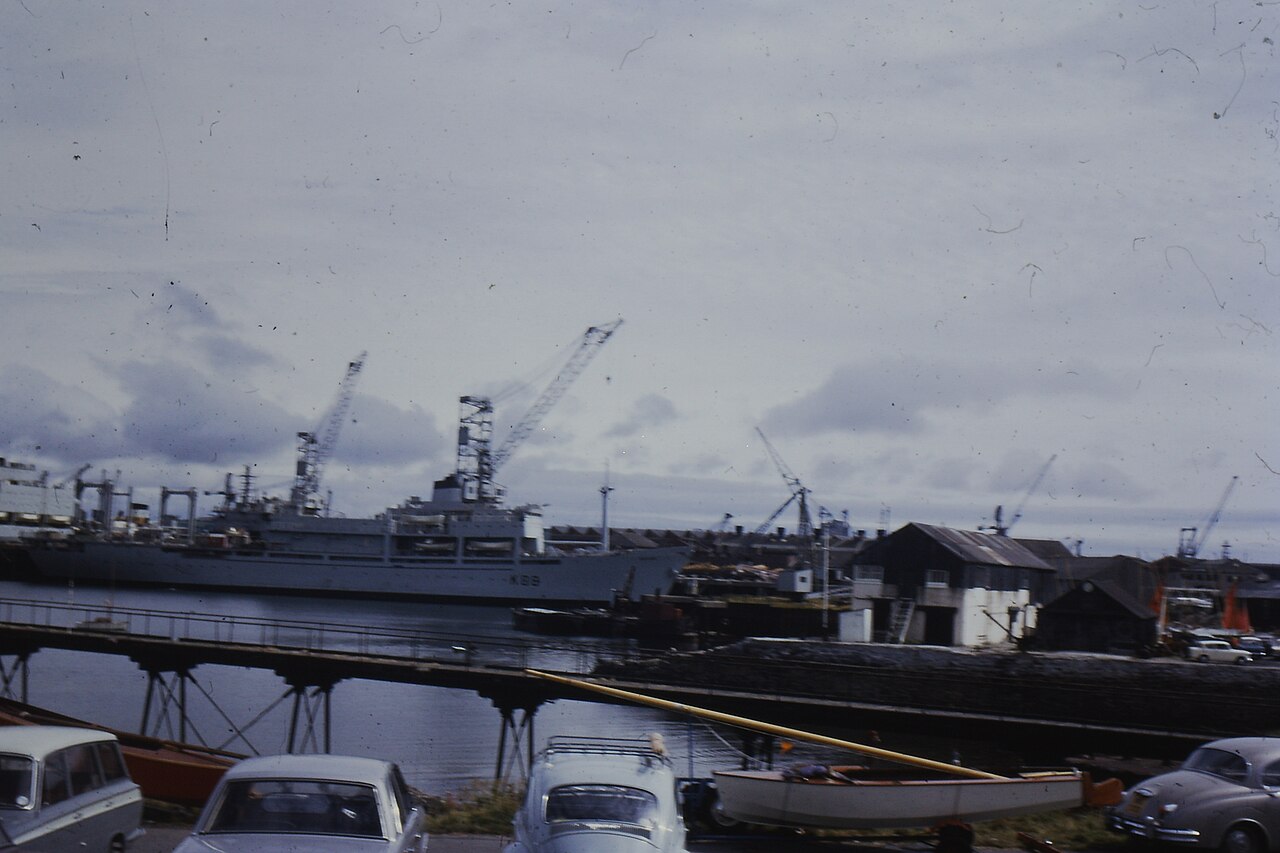
RFA Engadine (K08) was a helicopter support ship of the Royal Fleet Auxiliary. The need for Engadine was seen in the mid-1960s as more and more helicopters were deployed from Royal Navy aircraft carriers and surface combatants. The ship was ordered in August 1964, from Henry Robb of Leith, and commissioned in December 1967, replacing HMS Lofoten. She was the third British ship named HMS Engadine the previous two being a seaplane carrier and an aircraft transport ship. Engadine comes from the Engadin valley in south-east Switzerland, which is represented by the alphorns and edelweiss on her badge. In 1968 she was designated as one of the PYTHON locations for the dispersal and continuity of government in the event of nuclear war. Engadine's homeport throughout her career was Portland, Dorset.
Summary from Wikipedia, licensed CC BY-SA.
Frequently asked questions
- Where is RFA Engadine now?
- Voydar has no displayable AIS position for RFA Engadine in this profile. A coverage gap does not establish whether the ship is transmitting or where it is now.
- What kind of ship is RFA Engadine?
- RFA Engadine is a support vessel, built in 1967 by Henry Robb. The vessel is 133.4 m long.
- What sanctions and inspection records does Voydar hold for RFA Engadine?
- Voydar has no matched sanctions record displayed for RFA Engadine from the OFAC SDN list, the UK Sanctions List, the Canadian autonomous sanctions list, the EU list of designated vessels and the New Zealand Russia Sanctions Register. Coverage may be incomplete; this is not sanctions clearance. No matched inspection records are displayed for RFA Engadine. Missing records do not establish whether the ship has been detained.
Neighbouring IMO numbers
IMO numbers are issued in sequence. These are the nearest numbers below and above this ship's that have a full Voydar profile.
Use this data
This page is also available as JSON, free, with the source and licence of every section. Sections whose sources do not permit redistribution are listed as withheld.
GET /api/v1/vessels/6800684Using this data in code?
Every account gets a personal API allowance: 2,500 credits a month free, 25,000 with Pro. Pro adds internal business use; API plans add building the data into your own products.